Five Easy Home Decor Upgrades Under £20
Refreshing your home does not need to involve a large furniture purchase or a weekend of decorating. A few thoughtful changes can make a room feel brighter, calmer and more personal, especially when you choose items that work hard in busy family spaces.
The best budget-friendly home improvements are simple to install, easy to move around and useful in everyday life. A new cushion, a warmer light bulb or a neatly styled shelf can change the atmosphere without creating extra clutter.
These easy home decor upgrades under £20 are suitable for rented homes, family houses and anyone who wants a quick refresh without overspending. Prices can vary between shops, but each idea can be adapted to suit a small household budget.
Set A Clear Decorating Budget
Before buying anything, choose one room or one area to focus on. A £20 budget can disappear quickly when you pick up several small extras, so decide whether you are improving a mantelpiece, hallway, bedroom corner or living room sofa.
It helps to measure the space and check what you already own. A glass jar may become a vase, an old frame could display a children’s drawing, and a leftover tin of paint may be enough for a small shelf. This approach keeps the project affordable and reduces unnecessary purchases.
For more family-focused ideas about managing a home, parenting and household routines, visit this family lifestyle blog. Practical decorating works best when it fits the way your household actually lives.
Refresh One Wall Or Surface
A small tin of sample paint can make a noticeable difference when used on a narrow wall, alcove, shelf backing or the inside of a bookcase. Soft greens, warm creams and muted blues can add colour without overwhelming the room. Use painter’s tape for clean edges and allow the surface to dry fully before replacing ornaments.
If painting is not practical, try removable wallpaper or peel-and-stick tiles on a small section. These are especially useful in rented accommodation or for creating a temporary feature behind a desk. A single roll or pack may be enough for a limited area, keeping the total spend below £20.
Another low-cost option is to update the objects already on display. Group books by colour, place a small plant beside a framed print, or arrange three similarly coloured accessories together. Repetition makes an inexpensive display look intentional.
Add Soft Texture And Colour
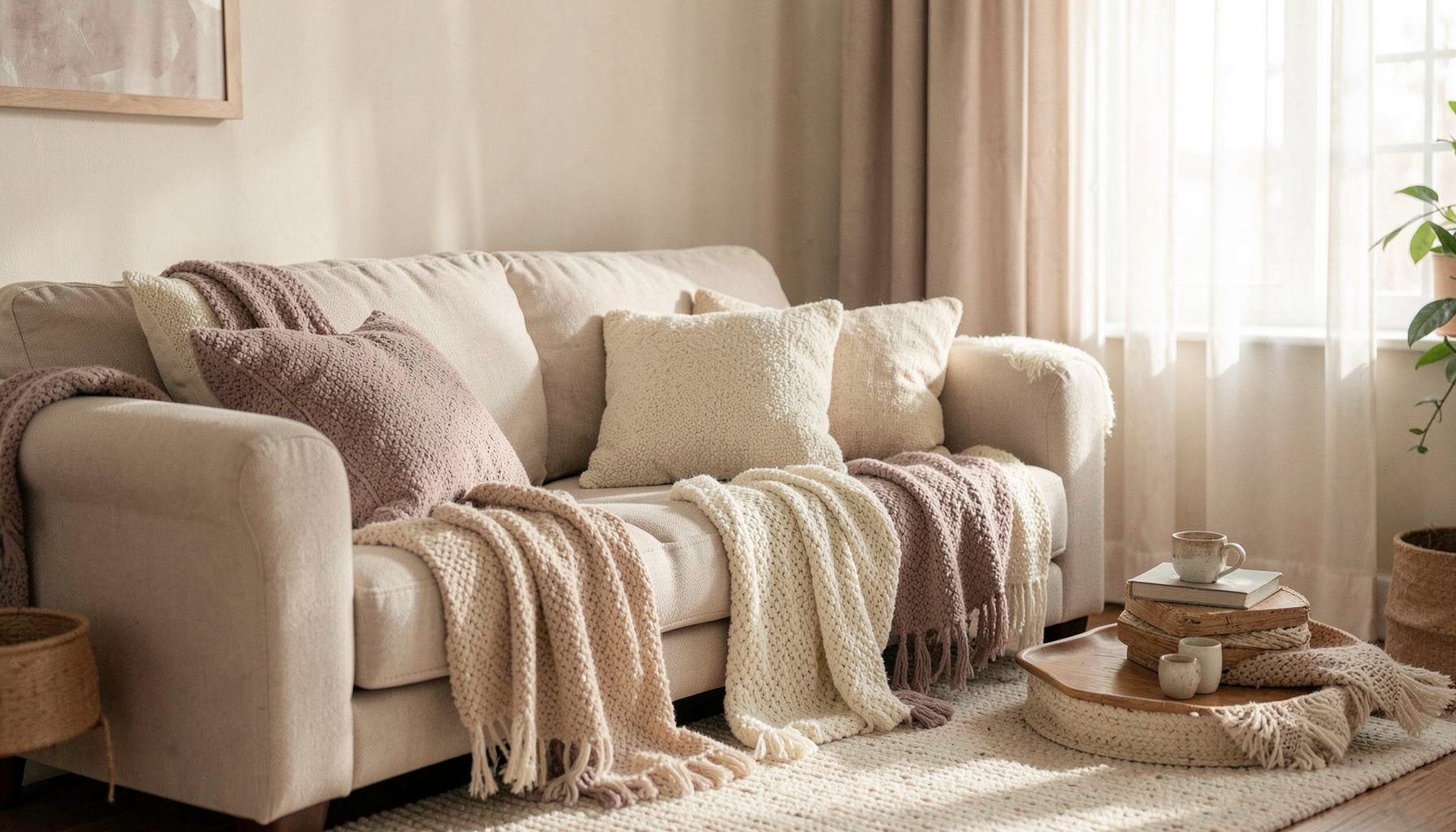
Cushion covers are one of the easiest ways to change a living room or bedroom. Rather than buying a complete cushion, look for affordable covers in a new colour, stripe or textured fabric and use the existing inserts. Combining two or three complementary shades can give a sofa a more considered appearance.
A small fleece throw can add warmth to a chair while bringing in another layer of colour. Choose a washable fabric if you have children or pets, and keep the pattern simple if the room already contains busy curtains, rugs or artwork.
You can also make a quick fabric update with a table runner, tea towels or a reusable cloth napkin arrangement. Folded neatly over a coffee table or dining bench, these everyday textiles can act as inexpensive seasonal decoration.
Make Lighting Feel Warmer
Lighting has a strong effect on how a room feels, and replacing one harsh bulb may cost less than £5. Choose a warm white bulb for bedrooms, lounges and dining areas, while brighter neutral light may work better in a kitchen or home office.
Battery-operated fairy lights can bring a gentle glow to a shelf, glass jar or child’s bedroom reading corner. Look for timer settings so they switch off automatically, helping to avoid wasted battery power. Keep cables and batteries safely out of reach of young children.
A budget lampshade can also change the look of an existing lamp base. Check the fitting size before buying, and choose a shade that allows enough light for the room. Even a small lamp placed on a sideboard can make an evening space feel more welcoming.
Compare The Cost Of Small Changes
The table below shows how a modest decorating budget might be divided. These are typical estimates rather than fixed prices, and shopping during sales or checking charity shops may reduce the total further.
| Upgrade | Typical Cost | Best Place To Use It | Practical Benefit |
|---|---|---|---|
| Sample paint pot | £3–£6 | Alcove, shelf or feature section | Adds colour with little mess |
| Cushion cover | £4–£8 | Sofa, bed or reading chair | Changes texture and style |
| Warm LED bulb | £2–£5 | Lamp or ceiling fitting | Creates a softer atmosphere |
| Small houseplant | £4–£10 | Shelf, windowsill or hallway | Brings life and colour indoors |
| Storage basket | £6–£15 | Living room, bathroom or bedroom | Hides everyday clutter |
| Removable hooks | £2–£5 | Hallway or utility area | Adds useful hanging space |
Choose one larger item or two smaller changes rather than trying to update every room at once. A £15 storage basket may provide more value than several decorative objects if it helps keep toys, blankets or paperwork under control.
When comparing prices, include delivery charges and check whether the item needs extra accessories. For example, a wall print may require a frame, while a lampshade may need a compatible fitting. Small details can affect the final cost.
Turn Storage Into Part Of The Decor
Open storage can look attractive when it is arranged with a balance of useful and decorative items. A woven basket beside the sofa can hold blankets, while a small tray on top can corral remotes, candles or reading glasses.
In a bathroom, matching jars can store cotton wool, hair accessories or bath salts. In a hallway, a row of inexpensive hooks can keep bags and coats off the floor. Pick finishes that suit the existing room, such as natural wood, white metal or black hooks.
Labels can make family storage easier to maintain. Use simple paper tags or chalk labels for baskets containing craft supplies, toys or seasonal accessories. A tidy system saves time and helps children know where their belongings should go.
Display Personal Pieces With Purpose
Decorating does not have to mean filling your home with new objects. Family photographs, postcards, children’s artwork and holiday keepsakes can add character when displayed in a consistent way. A low-cost multi-photo frame or a line of mini pegs can create a changing gallery.
Try arranging artwork in a small cluster rather than spreading individual pieces around the room. Use similar frames, a shared colour scheme or a simple border to make the display feel connected. Rotate children’s drawings every few weeks so the area stays fresh.
Affordable Styling Choices Worth Trying
- Use a tray to group candles, ornaments and remote controls in one place.
- Add a small mirror to reflect light in a narrow hallway or dark corner.
- Choose one accent colour and repeat it through cushions, books and accessories.
- Look for pre-loved frames, vases and baskets in charity shops.
- Move furniture and accessories before shopping to test whether the room already needs a new layout.
The most successful budget decor changes are the ones that make daily life easier as well as improving the appearance of a room. Start with one small area, spend carefully and give each item a clear purpose. Choose an upgrade this week, set a firm £20 limit and enjoy seeing how much difference a simple change can make.